Load and platform
Moving load, platform dimensions, load distribution and the number and spacing of lifting points.
 Zhonghui Intelligent Manufacturing
Product / Stage lifting equipment
Rigid chain lift table and orchestra pit lift for theatre seating conversion and stage extension; configurable load, travel, platform size and control.
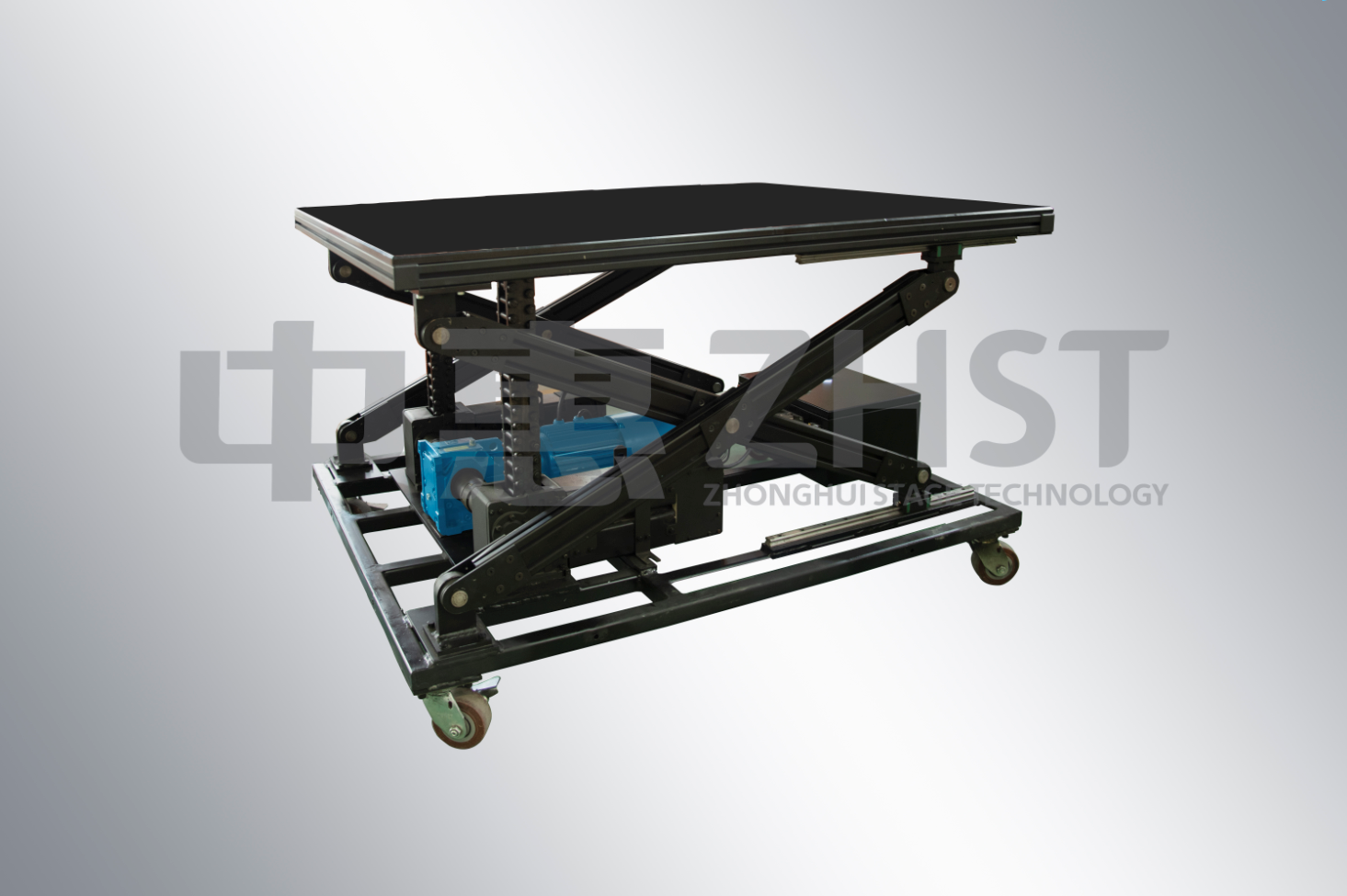
Image and data are referenced from Zhonghui Technology's public product archive. Project selection and final manufacturing data follow the drawing approved by Zhonghui Manufacturing.
Use the orchestra pit lift system application notes to compare theatre layouts, review related theatre stage machinery solutions, and see a grand theatre stage machinery case before submitting project inputs.
Yes. Load capacity, travel, dimensions, control mode and installation envelope can be configured.
Confirm the moving load, required travel, target speed, duty cycle, platform dimensions, available installation envelope and control interface. Zhonghui then reviews the structure, synchronization and safety requirements before final drawings.
Minimum installation height depends on the selected chain size, travel, load path, drive arrangement, supporting structure and service access. It must be checked against the actual pit or platform envelope rather than selected from one dimension alone.
Review load distribution, number and spacing of lifting points, encoder or feedback strategy, limit and emergency-stop circuits, mechanical guidance and the interface to the venue control system. Final synchronization and safety logic are project-specific.
Commissioning should verify the approved installation interfaces, unloaded and loaded motion, travel limits, emergency-stop response, feedback signals, synchronized lifting behavior, abnormal-noise checks and the handover records required by the project.
Base the plan on the approved system manual, operating frequency and environment. Record inspections of the chain path, drive and guides, fasteners, lubrication points where specified, limits, sensors, brakes, guarding and safety circuits. Do not replace the project-specific maintenance instructions with a generic interval.
Project selection checklist
A useful preliminary review starts with the real operating envelope. Share the items below so the load path, drive arrangement, guidance, synchronization and controls can be reviewed together.
Moving load, platform dimensions, load distribution and the number and spacing of lifting points.
Required travel, available pit or installation height, surrounding structure and maintenance access.
Target speed, moves per hour, operating hours, positioning needs and expected working environment.
Power supply, control interface, synchronized motion requirements, limits, emergency stop and status feedback.
Commissioning and maintenance
Acceptance is more useful when mechanical, electrical, control and handover evidence are reviewed as one system. The exact tests and intervals must follow the approved drawings, risk assessment and project manual.
Confirm installation interfaces, fasteners, guides, guarding, clearances, chain path, drive alignment and access for inspection against the approved documents.
Record unloaded and loaded travel, stopping behavior, limits, emergency stop, feedback signals, synchronization and abnormal noise or vibration observations.
Check the drive, chain path, guides, fasteners, brakes, limits, sensors and safety circuits at the project-defined intervals; document findings and corrective actions.
Retain approved drawings, test records, control backups, operating instructions, maintenance responsibilities and the contact route for engineering support.
Rigid chain lift table and orchestra pit lift for theatre seating conversion and stage extension; configurable load, travel, platform size and control. Stage machinery is engineered for each project. Share the following information so the product, installation conditions and control interface can be assessed together.
State the rated load, dynamic duty, operating frequency and any synchronized-motion requirement.
Provide available installation space, travel, platform dimensions and structural constraints.
Define speed, positioning accuracy, interlocks, emergency-stop logic and supervisory interfaces.
Confirm supply boundaries, installation, commissioning, documentation, training and acceptance requirements.