Load and duty
Rated load per lifting point, dynamic duty, operating frequency and any synchronized-motion requirement.
 Zhonghui Intelligent Manufacturing
Product / Rigid chain actuators
Six rigid chain actuator sizes for stage lifts, orchestra pits, platforms and industrial lifting: maximum static loads from 10 kN to 200 kN, rated speeds from 150 to 300 mm/s and travel up to 10 m depending on model and load. Supplied as actuator units for integrators and OEMs or as complete rigid chain systems.
Compare the key ratings, then open the model for full specifications. Ratings at maximum load and at maximum travel are not simultaneous.
| Model | Max. static load / travel | Max. dynamic load / travel | Rated speed | Min. installation height |
|---|---|---|---|---|
| 30A | 10 kN / 1.2 m | 8 kN / 1.2 m | 150 mm/s | 200 mm |
| 35A | 12 kN / 1.5 m | 10 kN / 1.5 m | 200 mm/s | 226 mm |
| 40A | 40 kN / 2 m | 30 kN / 2 m | 300 mm/s | 370 mm |
| 60A | 90 kN / 2 m | 60 kN / 2 m | 300 mm/s | 450 mm |
| 80A | 130 kN / 2 m | 95 kN / 3 m | 300 mm/s | 550 mm |
| 100A | 200 kN / 3.5 m | 150 kN / 5 m | 300 mm/s | 650 mm |
Series data: Zhonghui Group product documentation for the 30A–100A rigid lifting chains. Static and dynamic ratings at maximum load and at maximum travel are listed separately and are not simultaneous. Final selection, interfaces and manufacturing data follow the drawing approved for your project.
Compact unit for small lift platforms, auditorium risers and temporary stage settings, for example a small scissor-type lifting platform.
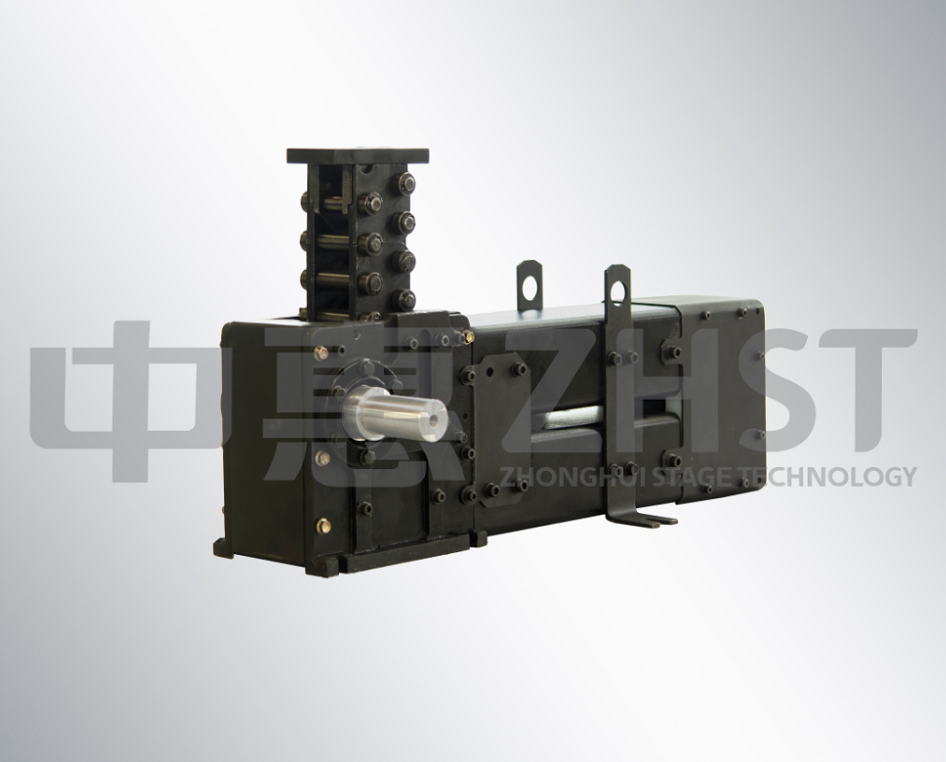
Compact unit for small lift platforms, auditoriums and temporary stage settings where slightly higher load and speed than 30A are needed.
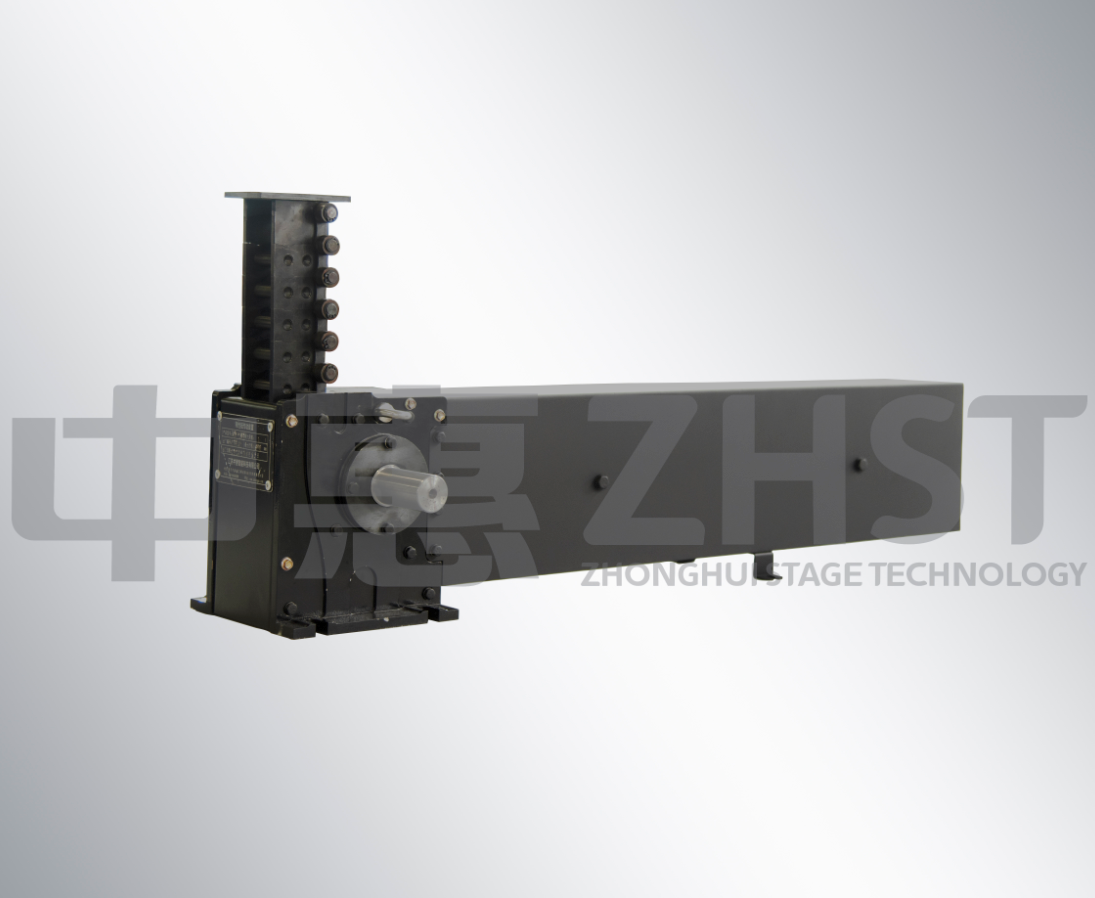
Long travel with heavier load for side auxiliary lifting platforms, side-stage offset platforms, choral risers and temporary stage settings.
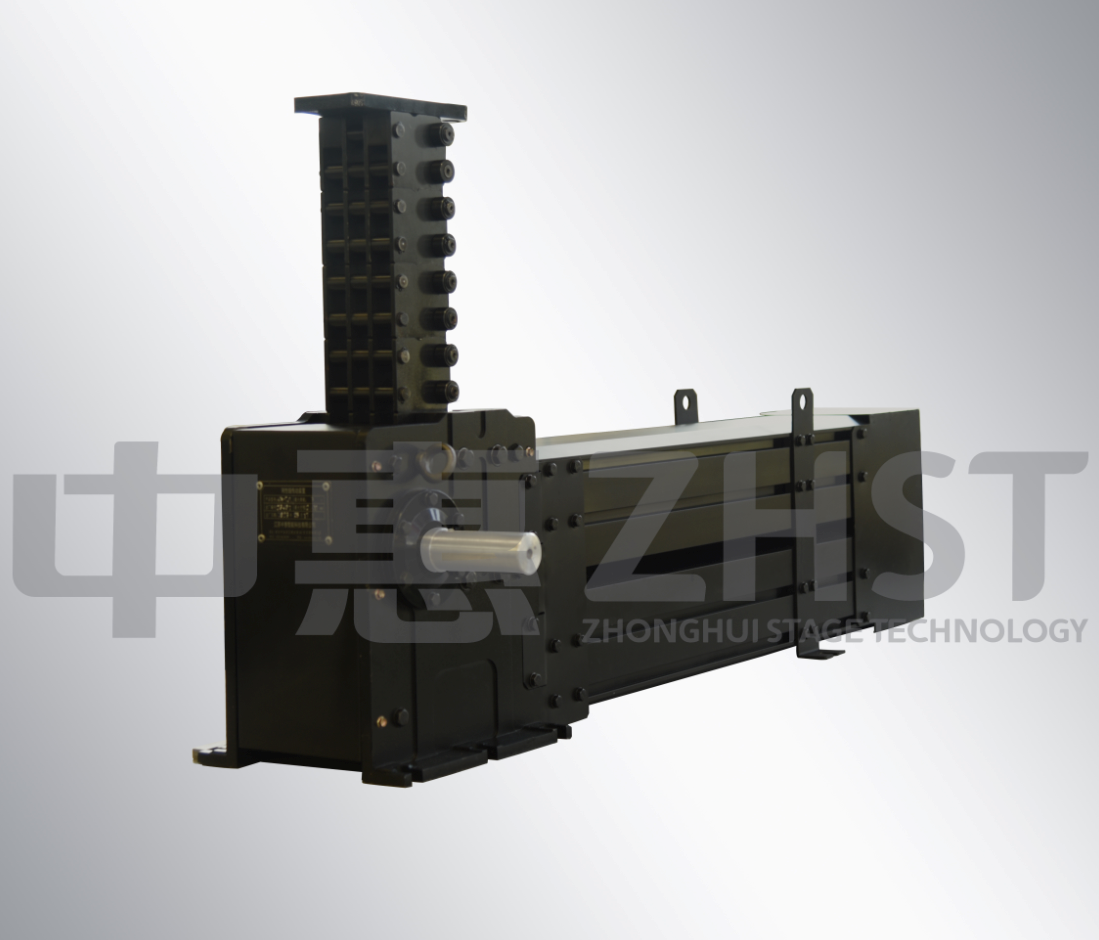
Long travel with heavy load for side auxiliary platforms, offset platforms and choral risers in theatres and auditoriums.
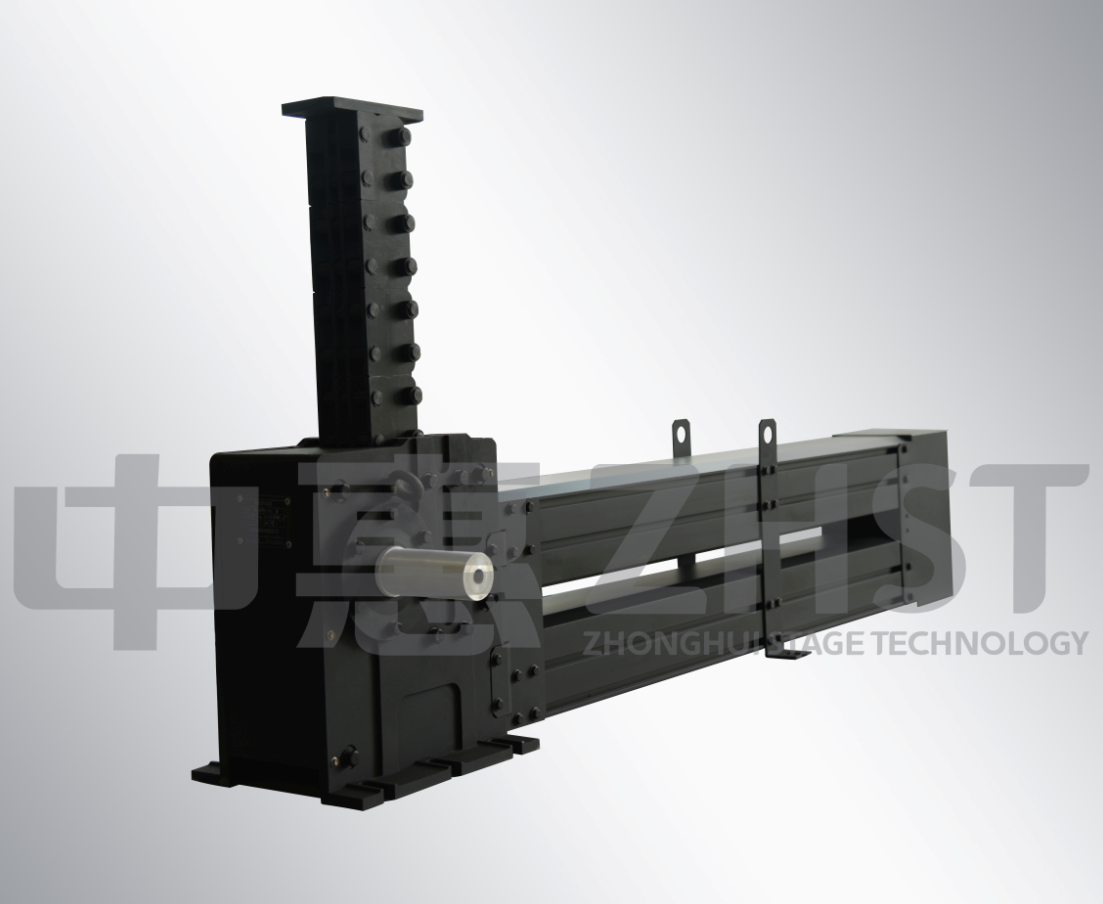
Heavy-duty unit for orchestra-pit lifts, main-stage lifting platforms and choral risers.
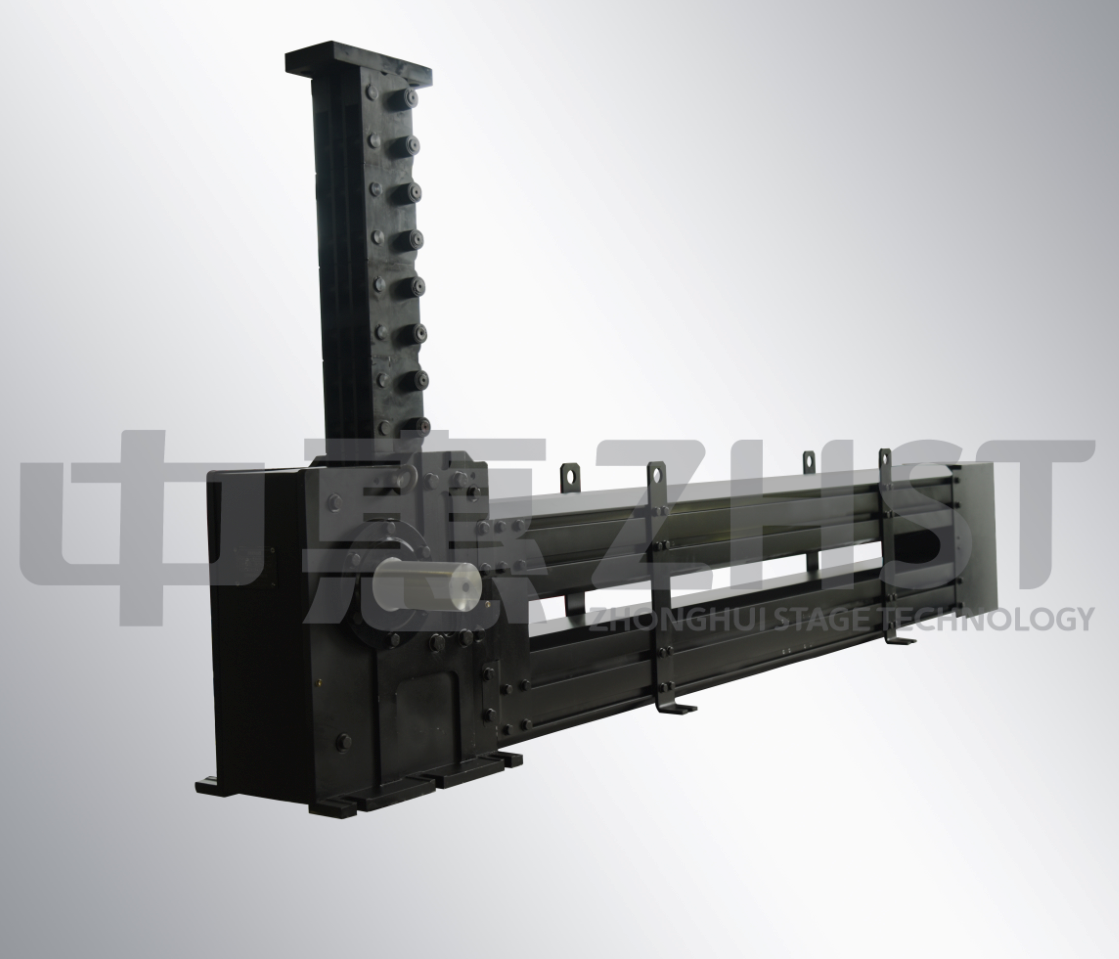
Largest size for orchestra-pit lifts and main-stage lifting platforms, with travel up to 10 m at reduced load.
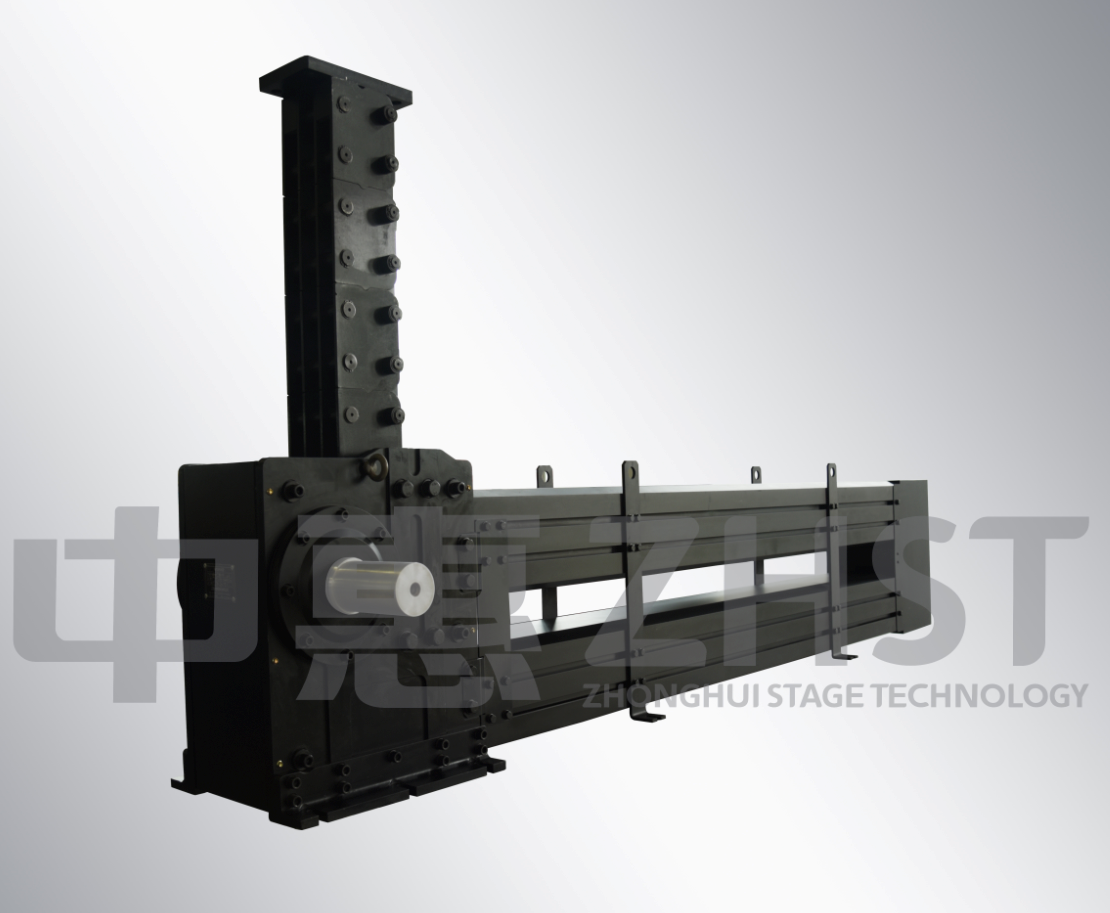
The drive pinion engages the chain; on the load side the links interlock into a rigid column that can push and hold the load. On the return side the chain unlocks and folds into the chain storage box, so a long stroke fits in a low installed height. See rigid chain technology and the comparison with hydraulic and screw-jack lifting.
Engineering, installation and commissioning support comes from our parent company — see about Zhonghui Group and qualifications.
A rigid chain actuator is a linear actuator whose chain links lock together as they leave the drive, forming a rigid column that can push, pull and hold a load. On the return stroke the chain unlocks and folds into a storage box, so the installed height stays low.
Push chain and rigid chain describe a single interlocking chain; zip chain usually describes two chains that zip together into a column. All are used for compact long-stroke lifting; selection depends on load, travel, speed and space.
Start from moving load per lifting point and required travel, then check speed and installation height. As a guide: 30A/35A for small platforms, 40A/60A for side and auxiliary platforms, 80A/100A for orchestra-pit and main-stage lifts.
Yes. Multi-point and matrix platforms use several units with synchronized control; the layout and control interface are engineered for the project.
Both. We supply rigid chain actuators for integrators and OEMs, or complete systems and rigid chain lift tables.
Price depends on model, quantity, travel and controls. We quote EXW (ex-works, collected from our factory) or on terms negotiated in the contract; lead time and warranty are set per project. Overseas installation supervision is available.
Share the following so the actuator, installation conditions and control interface can be assessed together.
Rated load per lifting point, dynamic duty, operating frequency and any synchronized-motion requirement.
Available installation height, travel, platform dimensions and structural constraints.
Speed, positioning accuracy, interlocks, emergency-stop logic and supervisory interfaces.
Supply boundaries, installation, commissioning, documentation and acceptance requirements.